
Why Retaining Walls Fail in Florida — And the Drainage Detail That Saves Them
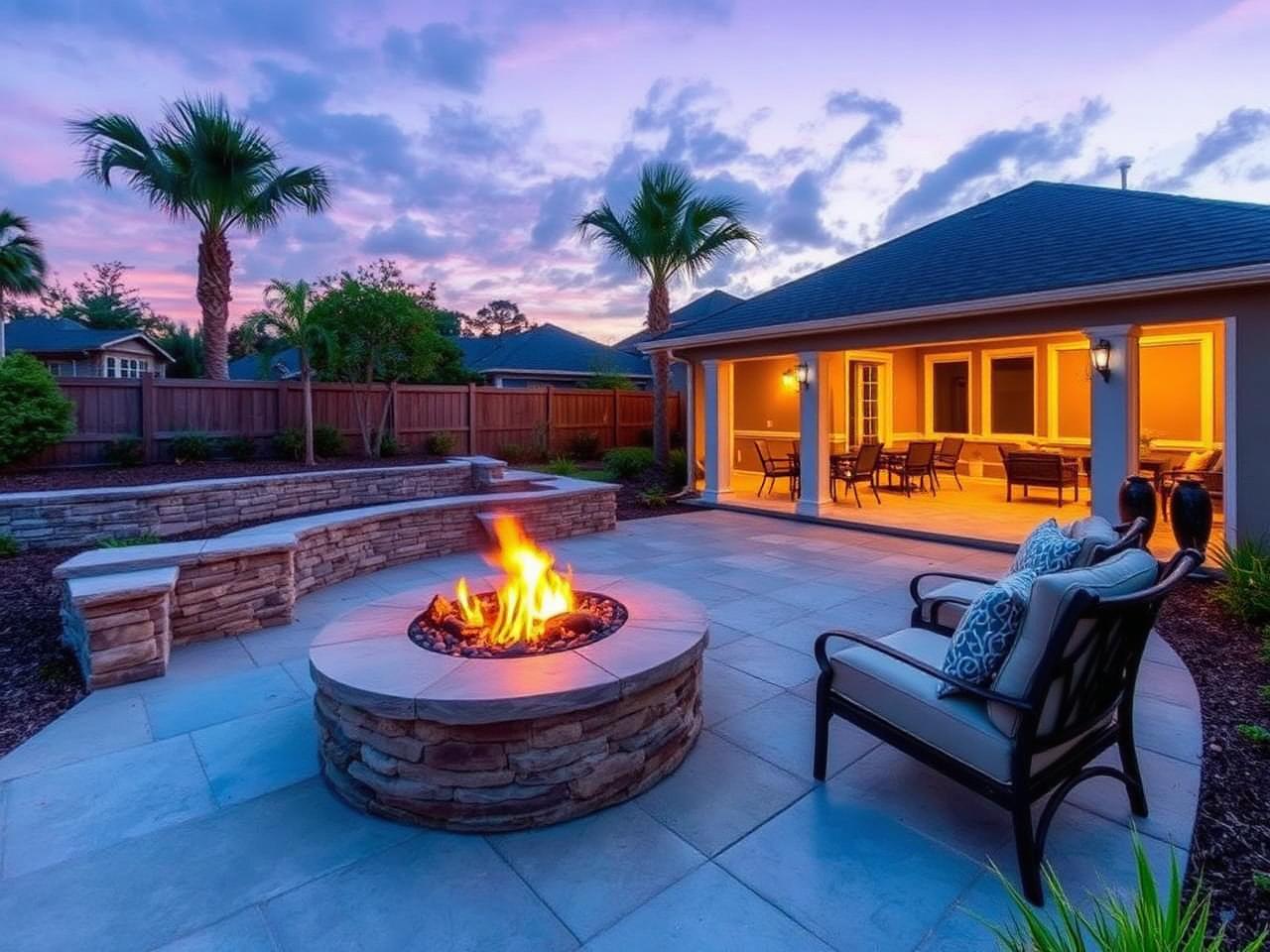
We get called to look at leaning, bulging, and cracked retaining walls across Brevard County several times a season, most often in Rockledge where the river bluffs create real elevation change. The failure is almost never the block. It's water.
Soil behind a wall becomes dramatically heavier when it's saturated. A Florida summer downpour can add enormous hydrostatic pressure behind a structure that was designed only for dry soil weight. Without a path for that water to escape, the wall gets pushed until something gives.
The detail that prevents it is straightforward and non-negotiable: a drainage aggregate zone directly behind the wall, a perforated drain pipe at the base daylighted to a lower elevation, and geotextile fabric separating aggregate from native soil so it doesn't clog with fines. That system moves water out before it can push.
Base preparation matters just as much. A compacted crushed-stone leveling pad, with the first course buried to the correct depth, keeps the wall from settling unevenly. Walls above a certain height also need geogrid reinforcement tied back into the retained soil — and in most Brevard jurisdictions, engineering and a permit.
Cap adhesion, proper batter, and backfill compaction in lifts round out the build. None of it shows in the finished photograph, which is precisely why it's the first thing cut on a low bid.
If your wall is already leaning, resist the urge to just relay the top courses. We excavate, evaluate the base and drainage, and rebuild the system correctly — because a cosmetic repair on a drainage failure fails again by the next rainy season.